
The total nuclear power generated in the country would now increase to 3310 MW.
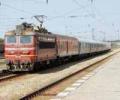
The current system of the Indian Railways is on the brink of collapse. The Indian railways working model is not financially viable either. The railways coffer have gone, almost, bankrupt, that is the outcome of the intense review undertaken by the committee consisting of galaxy of experts that was given task to review the Indian railways safety.
India on Monday asserted its "entire nuclear technology has been developed indigenously and action consistent with responsible behaviour."\n
Dr Anil Kakodkar, chairman of India's Atomic Energy Commission and his agency was the 600-pound gorilla in the room that vetoed the compromise language on the stalled bilateral civilian nuclear cooperation accord, known as the 123 Agreement.
Delivering a public lecture on 'Evolving Indian nuclear programme: Rationale and perspectives' organised by Indian Academy of Sciences in Bangalore on Friday, he said the currently-known uranium resources in the country were enough for setting up nearly 10,000 MWe installed capacity pressurised heavy water reactors and the country will need to import nuclear reactors and the fuel to achieve energy security.
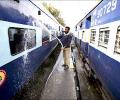
A high-level safety review committee for the Indian Railways has suggested fresh tax on passengers.
The agreements included a declaration on nuclear energy and a pact on defence cooperation.
The safeguards issue is unlikely to come up at Thursday's meeting of IAEA's Board of Governors and will come up for approval at a special Board meeting later. IAEA Director General Mohamed El-Baradei and Atomic Energy Commission chairman Anil Kakodkar initiated the talks.

The event took off with an introductory speech by Dr Ajit Ranade appreciating the achievements of IIT Bombay. Among the other speakers were Dr Anil Kakodkar, chairman of the board of governors, IIT-B, Infosys chief Nandan Nilekani and Prof. R K Shevgaonkar, deputy director of finance and external affairs and the co-chairman of the IITBAA.
The Centre is reviewing the security measures at nuclear power plants across the country, in the wake of the recent terror strikes in Mumbai, Atomic Energy Commission Chairman Anil Kakodkar said on Thursday."Several security measures have already been put in place. We are reviewing in the context of what happened in Mumbai and certainly whatever additional (security), which are necessary, we will put in place," he said.
Amid the diplomatic and political storm generated by the disclosures on the India-United States nuclear deal, US Ambassador to India David Mulford met Prime Minister Manmohan Singh in New Delhi on Thursday and sought to clarify Washington's stand.Although officials were tight-lipped about what was discussed at the meeting, sources said Mulford told the Prime Minister that no new conditions had been introduced.A senior US embassy official sought to play down the meeting.
If IIT-Bombay Chairman Anil Kakodkar has his way, studying at any of the 15 IITs across the country will now cost Rs 250,000 every year against the current Rs 50,000. Is this hike justified?
If the IIT Council has its way, fees for the most prestigious engineering institute will shoot up fivefold.
India has offered to place 14 of the 22 thermal power reactors under IAEA safeguards in a phased manner between 2006-14, Dr Kakodkar told a media conference, adding the agreement would not affect the country's strategic programme in any respect.
Nuke scientists support AEC chief's contention
The top scientist said India's ambition should be to do something which no other nation has attempted so far.
New Delhi has made it clear that the issue of reprocessing of spent fuel is 'non-negotiable' and it is committed to retaining the right to do so.
The project will research a clean and limitless alternative to dwindling fossil fuel reserves by testing nuclear fusion.
Dr Kakodkar made light of the suggestion that the NSG would meet only in April 2007, which could possibly impact the deal.
Anil Kakodkar will also discuss with IAEA representatives an Additional Protocol.
International experts reaching Vienna for the 51st general conference of the IAEA are understood to be keen to know about the opportunities likely to emerge if the Indo-US civil nuclear deal goes through.

Despite optimism that the deal will be sealed, differences marred talks between the two sides.
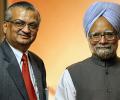
'Dr Singh, visibly relieved, said, 'Yesterday night I couldn't sleep. I stayed awake, praying throughout. You have saved the country'.' A fascinating excerpt from former atomic energy chief Dr Anil Kakodkar's memoir Fire And Fury: Transforming India's Strategic Identity.

To curb rising food prices, the Union government is contemplating using large-scale nuclear irradiation technologyfor increasing the shelf life of fruit and vegetables, particularly that of onions and potatoes.

His resignation was even questioned in Rajya Sabha with Congress wanting a clarification.

The HRD ministry is preparing a point-by-point rebuttal on charges that include infringing on the autonomy of higher educational institutions and a cut in the education budget.

The system will give a boost to regional trade and business.

Barely days after imposing a 40 per cent export tax on onions to cool down soaring prices, which, in turn, triggered widespread protests across the main growing belts, the Centre on Tuesday sought to mitigate both political and economic tensions gripping parts of Maharashtra. It decided to procure an additional 200,000 tonnes of onions at Rs 2,410 per quintal for its buffer stock from farmers, a rate that is strikingly close to the price at which they were being exported before the 40 per cent duty was levied on August 19. The export price before the imposition of the duty stood at around $320 per tonne free on board (approximately Rs 2,650 per quintal).

Sports Minister Sarbananda Sonowal said that his Ministry on Monday recommended Saina's name for Padma Bhushan.

The combativeness reflects her insistence not to meekly acquiesce to what has been going on in Raisina Hill for years or decades, observes Kartikeya Tanna.
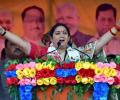
Being made a member of the Cabinet Committee on Political Affairs makes her an important player in BJP politics, observes Rashme Sehgal.

Would Ukraine be such a pushover if it had that nuclear stockpile?' asks Shekhar Gupta.

Organiser, the Rashtriya Swayamsevak Sangh's organ, has alleged that prestigious institutes like Indian Institute of Technology were being turned into places for "anti-India and anti-Hindu" activities.

'There has definitely been a breakthrough in the nuclear logjam. It is good to see nuclear energy back on the rails,' says Dr Anil Kakodkar, former chairman, Atomic Energy Commission.

The Bullet train is a childish desire to join an elite club at the cost of 99.9 per cent of rail passengers, says S Pushpavanam.
It is important to approach the belief of people in ancient India's achievements with a sense of proportion, balance and empathy, argues B S Raghavan, the distinguished civil servant.

'The bullet train project is a complete sham'

Were the May 1988 nuclear tests a success? 20 years after Pokharan, a look back at those decisive atomic tests through the eyes of someone who knew.

"I am an academic and I have always made it clear that my ultimate home is in the realm of ideas," Rajan said in a letter to staff.

Modi government is pushing GM food crops without adequate safety assessment and transparency, claim activists.
